Proposed Fast-Casual Outlet Aims to Revitalise Vacant Aberdeen Office Space Amidst Shifting Commercial Landscape
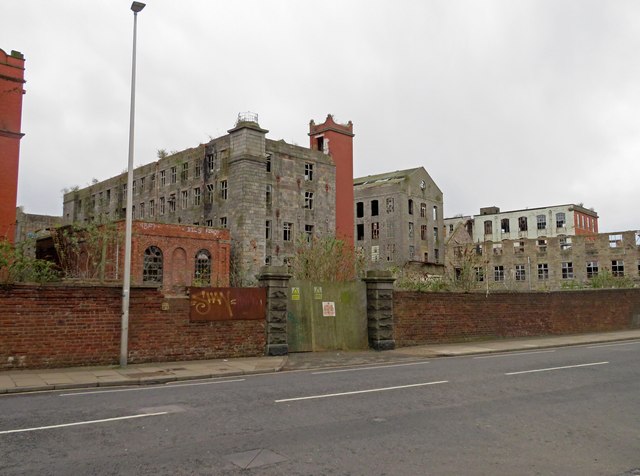
Aberdeen’s Holburn Street could soon welcome a new Pepe’s Piri Piri restaurant, as plans have been lodged with Aberdeen City Council to transform a long-vacant office building into a fast-casual dining establishment. The application by Create Studio Architecture, on behalf of the franchisor, seeks to repurpose the former premises at 79-81 Holburn Street, which has stood empty since March 2025, addressing persistent vacancy challenges within the city centre. This initiative aligns with broader regeneration efforts aimed at breathing new life into Aberdeen’s commercial heart.
The proposal highlights the ongoing difficulties in securing tenants for commercial properties in Aberdeen. Documents submitted with the application indicate the site has been “marketed extensively” without attracting interest for either traditional office or retail use. If approved, the new Pepe’s Piri Piri is designed to seat approximately 48 diners and would necessitate internal modifications to the multi-storey structure. Developers argue that bringing the currently unoccupied building back into active use would contribute positively to the local economy and “support the vibrancy and vitality of the city centre.”
Aberdeen’s Evolving Commercial Property Market
Aberdeen’s commercial property market continues to navigate significant headwinds, notably high office vacancy rates, particularly within older, secondary stock. Data for Q1 2026 revealed an overall office vacancy rate of 16.8% across the city, rising by 90 basis points from the previous quarter. The trend continued into Q2 2026, with availability increasing by 6% and the overall vacancy rate climbing further to 17.8%. This challenging environment has been exacerbated by the protracted downturn in the oil and gas sector, a historical economic cornerstone, coupled with evolving retail behaviours and the lingering effects of the COVID-19 pandemic, which accelerated the shift towards hybrid working models.
Despite these challenges, there are nuances in the market. Prime office rents have remained stable at £32.50 per square foot throughout Q1 and Q2 2026, with forecasts predicting a 3% increase by the end of 2026. While Grade A availability saw a significant reduction in Q1 2026 to just 1.1%, it increased in Q2 2026 to 2.11% due to some space returning to the market. This indicates a sustained “flight to quality,” where occupiers increasingly seek modern, efficient, and well-specified buildings. This disparity underscores the growing importance of change-of-use proposals, such as the one for Holburn Street, as a vital strategy for urban regeneration. Interestingly, the residential property market in Aberdeen has shown resilience, with flat sales increasing by 23.7% in Q2 2026 compared to the previous quarter, driven by attractive prices for first-time buyers and investors.
Driving Urban Regeneration Through Adaptive Reuse
The proposed restaurant forms part of the wider transformation efforts underway in Aberdeen’s city centre. The City Centre and Beach Masterplan, backed by a £150 million commitment from Aberdeen City Council, aims to create a more vibrant and sustainable destination. Key projects include the new market building, Flint, where base build completion is anticipated in spring 2027, with fit-out works extending into summer 2027 and an opening in early autumn. Significant streetscape improvements along Union Street Central are expected to conclude in late summer 2026, though utility works pose a risk of extending completion into early autumn. Additionally, the Beach Park’s events field and play park are also slated for completion in autumn 2026.
Repurposing long-term vacant commercial units, particularly older office stock, is a crucial element of these revitalisation efforts. Empty properties can exert a negative impact on local communities and economies, making adaptive reuse projects essential for fostering vibrancy and creating employment opportunities. The architectural firm handling the application, Create Studio Architecture, has been noted for its involvement in other regeneration initiatives in Aberdeen, including the “Upper Floors Project,” which focuses on bringing underused spaces above ground-floor level on Union Street back into use.
Pepe’s Piri Piri: A Dominant Player in a Growing Market
Founded in London in 2007, Pepe’s Piri Piri has grown to become the UK’s largest piri piri chicken franchise, with approximately 260 locations nationwide in 2026. The chain, known for its flame-grilled chicken with various spice levels, offers a fully halal menu alongside vegetarian options, and has expanded internationally into markets such as Pakistan and the UAE.
This expansion mirrors significant growth trends within the UK’s fast-casual and quick-service restaurant (QSR) sectors. The UK fast food market was valued at USD 60.65 billion in 2025 and is projected to reach USD 98.22 billion by 2034, demonstrating a compound annual growth rate (CAGR) of 5.58% between 2026 and 2034. The broader UK casual dining market is also forecast for robust growth, from USD 9.96 billion in 2025 to USD 18.29 billion by 2034, at a CAGR of 6.94%. This growth is propelled by increasing consumer demand for convenience, the proliferation of online delivery platforms, and evolving consumer lifestyles. The QSR market, encompassing chains like Pepe’s, is specifically forecast to grow at a CAGR of 5.23% from USD 37.64 billion in 2026 to USD 48.56 billion by 2031, with home delivery remaining the fastest-growing channel. The 25-34 age group remains a key demographic driving demand, prioritising value and convenience despite rising operational costs.
In Case You Missed it:


Navigating Regulatory Pathways for Change of Use
The premises at 79-81 Holburn Street have a history rooted in hospitality, having previously operated as Little Italy pizzeria until 2012 and Hey Brazil BBQ house until approximately 2014, before serving as offices for the Aberdeen Drilling School. Holburn Street itself has been a vibrant commercial thoroughfare since Georgian times.
The current application seeks a change of use from office space (likely Class 4, Business) to a restaurant (Class 3, Food and Drink) under Scottish planning law. The Town and Country Planning (Use Classes) (Scotland) Order 1997 categorises different uses of land and buildings. A change from one use class to another, if considered a ‘material’ change, typically requires planning permission from the local authority, in this instance, Aberdeen City Council. Such change-of-use applications are becoming increasingly common across Scotland and the wider UK as landlords and businesses adapt to shifting market dynamics, seeking to repurpose underutilised commercial assets to meet new demands and contribute to urban revitalisation.