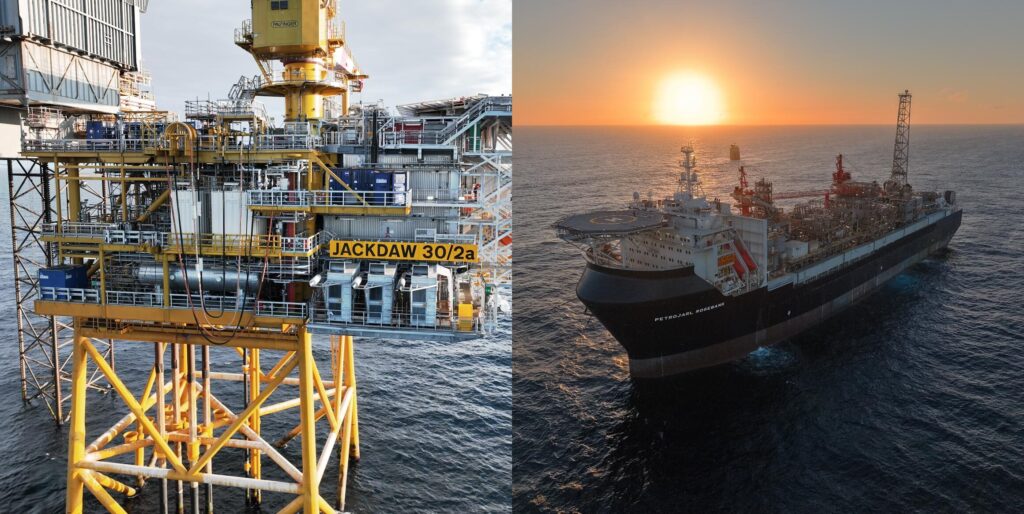

A coalition of ten trade unions, representing millions of British workers, has intensified pressure on Prime Minister Andy Burnham to reject plans for drilling in the controversial Rosebank oil field. The unions are “insistent that the Labour Government must do the right thing by the planet, UK communities and workers, and stop Rosebank”.
The decision regarding Rosebank, identified as the largest untapped oil field in the North Sea and located north-west of Shetland, is widely perceived by environmental advocates as a critical test of the government’s commitment to climate change objectives.
Conversely, a recent report commissioned by developers Adura and produced by Public First presented a stark economic warning. It suggested that failing to develop both Rosebank and the Jackdaw gas field, situated east of Aberdeen, could lead to an estimated £10.8 billion loss to the UK economy by 2035. The analysis further indicated a potential reduction of 3,330 jobs annually if these key projects do not proceed. Adura, a joint venture between Equinor and Shell, along with Ithaca Energy, holds ownership of the Rosebank field.
Adding to the calls for approval, Conservative leader Kemi Badenoch urged the Prime Minister to “stop faffing about” and authorise further drilling in the North Sea, aligning with her party’s stance to maximise oil and gas extraction.
However, trade union leaders remain firm in their opposition. Andrea Egan, General Secretary of Unison, argued that the Government “needs to accept that the more fossil fuels we burn, the more extreme our weather will become”. She highlighted that public service workers, including those represented by Unison, are “on the frontline of extreme weather” and therefore “need guarantees that the Government is serious about tackling climate change”. Ms Egan concluded, “The Prime Minister must act in the best interests of the country and reject Rosebank.”
Ed Harlow, President of the National Education Union, echoed these sentiments, urging Prime Minister Burnham to “listen to public sector workers who experienced what it’s like to try and teach children, care for the sick and elderly, and keep this country moving in extreme heat”. He asserted, “There is nothing ‘pragmatic’ in knowingly making these conditions worse, just so a handful of oil and gas firms can keep profiting. Approving Rosebank, after the summer we’ve had, would be outright arson.”
Further testimony came from Alex Heard, a teacher from Norwich, who stated that “the climate crisis has pushed our schools to breaking point” and emphasised, “As a science teacher, it is crystal clear that we can have no new oil and gas if we are to avoid breaching catastrophic tipping points.” Jordan Rivera, an NHS occupational therapist, also reported “critical” operations being cancelled during recent heatwaves due to A&E departments and ambulances facing “record demand”.
In Case You Missed it:
 MSPs reject Tory call to greenlight Jackdaw and Rosebank fields immediately
 Conservatives call for next Labour Prime Minister to scrap GB Energy
 Fury over Russian oil sanctions shift as MPs reject bid for new oil and gas licences in North Sea
 New Scottish Labour leader prioritises oil and gas in talks with Prime Minister
Lee Hunter, North-West regional chair for the Fire Brigades Union, warned that the UK is “not prepared for the extremes we’re seeing,” citing “record wildfires this summer, or the increase in flooding we’re dealing with in winters”. He added, “This is the new normal, and we’re stretched to our limits. That’s why our union is saying no to Rosebank. It will just pour more fuel on the fire, making an already difficult job impossible.”
Environmental campaigners have welcomed the union’s intervention. Lang Banks, Director of WWF Scotland, acknowledged the “vital role in shaping climate action in this country” played by trade unions and their members. He concurred with the unions, stating that “after a summer of extreme heat and devastating wildfires, it would be irresponsible to approve new oil and gas developments that would accelerate climate change and do nothing to lower the energy bills of UK households.”
A spokesperson for the UK Government’s Department for Energy Security and Net Zero maintained a neutral stance, stating: “We do not comment on speculation. The North Sea remains a vital national asset and oil and gas will continue to play an important role in our energy system for decades to come – alongside transitioning to clean power to protect jobs and tackle the climate crisis. Any decision will take into account all relevant evidence, including environmental assessments and public representations received during the consultation process.”